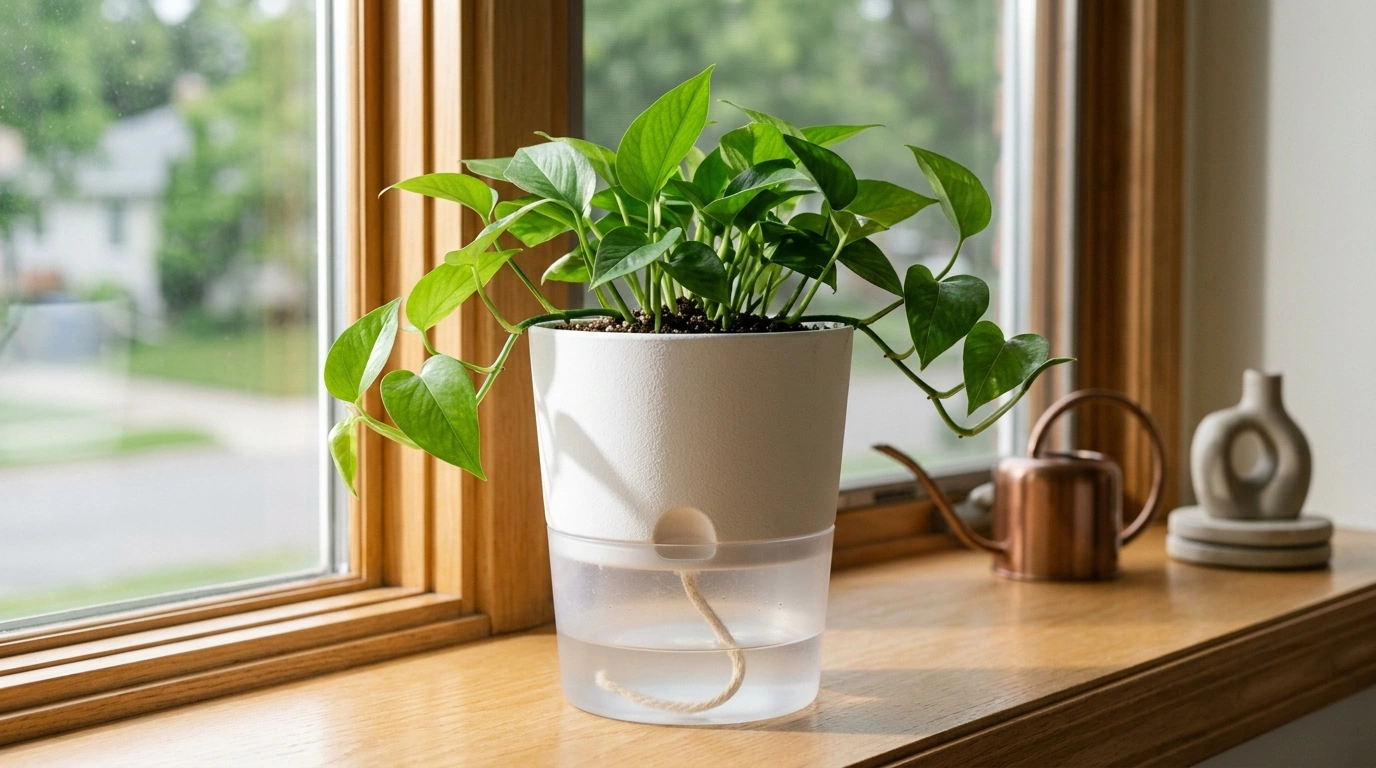
A self-watering flowerpot with a cotton rope wick helps keep soil moisture steadier between waterings, making it easier to care for small houseplants while adding a clean, decorative look to shelves, desks, and windowsills. Instead of guessing when to water (or accidentally overdoing it), the wick system supplies moisture gradually from a reservoir below—especially helpful for plants that get droopy fast when they dry out.
The main difference is the wick. A cotton rope draws water upward into the potting mix as the soil dries, helping smooth out the “soak it, forget it, panic-water later” cycle that stresses many indoor plants.
Think of the pot as two zones: a water reservoir on the bottom and the plant’s root zone above. The cotton rope connects them, delivering water slowly as needed.
If you’ve dealt with root problems before, it helps to understand the basics of overwatering and root health; Penn State Extension offers a solid overview of common root-rot causes and prevention at extension.psu.edu.
Cotton-wick self-watering pots shine with plants that like steady moisture. They can be adapted for drier plants, but the setup has to change so the mix doesn’t stay damp for too long.
| Plant type | Typical moisture preference | How to set up the wick pot |
|---|---|---|
| Tropical foliage (pothos, philodendron) | Evenly moist | Use a light, airy mix; keep reservoir partially filled |
| Peace lily / ferns | Consistently moist | Use a moisture-retentive but well-aerated mix; refill more often |
| Herbs (basil, mint) | Moist but not soggy | Use a fast-draining mix; avoid keeping reservoir full all the time |
| Succulents / cacti | Dry between waterings | Use very gritty mix; consider shortening/removing wick and watering manually |
The best results come from pairing the right soil structure with the wick. Dense mixes can turn a self-watering pot into a “never-drying” pot, so a little prep goes a long way.
For practical watering fundamentals (including how environment changes watering needs), University of Minnesota Extension has a helpful guide at extension.umn.edu.
Self-watering doesn’t mean “set and forget forever.” It means fewer emergencies and more predictable routines.
Indoor conditions can swing from dry winter air to summer heat quickly. If you’re managing heat or drought stress, the Royal Horticultural Society has broader watering guidance at rhs.org.uk.
If you keep plant tags, care notes, or fertilizer schedules at your workstation, a simple organizer like the 10PCS A4 Hanging File Folder – Colorful Portable Document Organizer can help keep everything in one place without clutter.
Most plants will use a reservoir anywhere from every few days to about 1–2 weeks depending on light, temperature, potting mix, and growth rate. Check the reservoir and the soil during the first week to learn your plant’s rhythm, then refill when the reservoir is nearly empty.
Yes, but dense potting soils can stay too wet in a self-watering setup. For many houseplants, mixing in perlite and/or orchid bark improves airflow so moisture stays even without turning soggy.
It can work with modifications: use a very gritty mix, reduce or remove the wick, and allow the reservoir to run dry between refills. Without those changes, it’s usually better suited to plants that prefer consistently moist soil.












Leave a comment