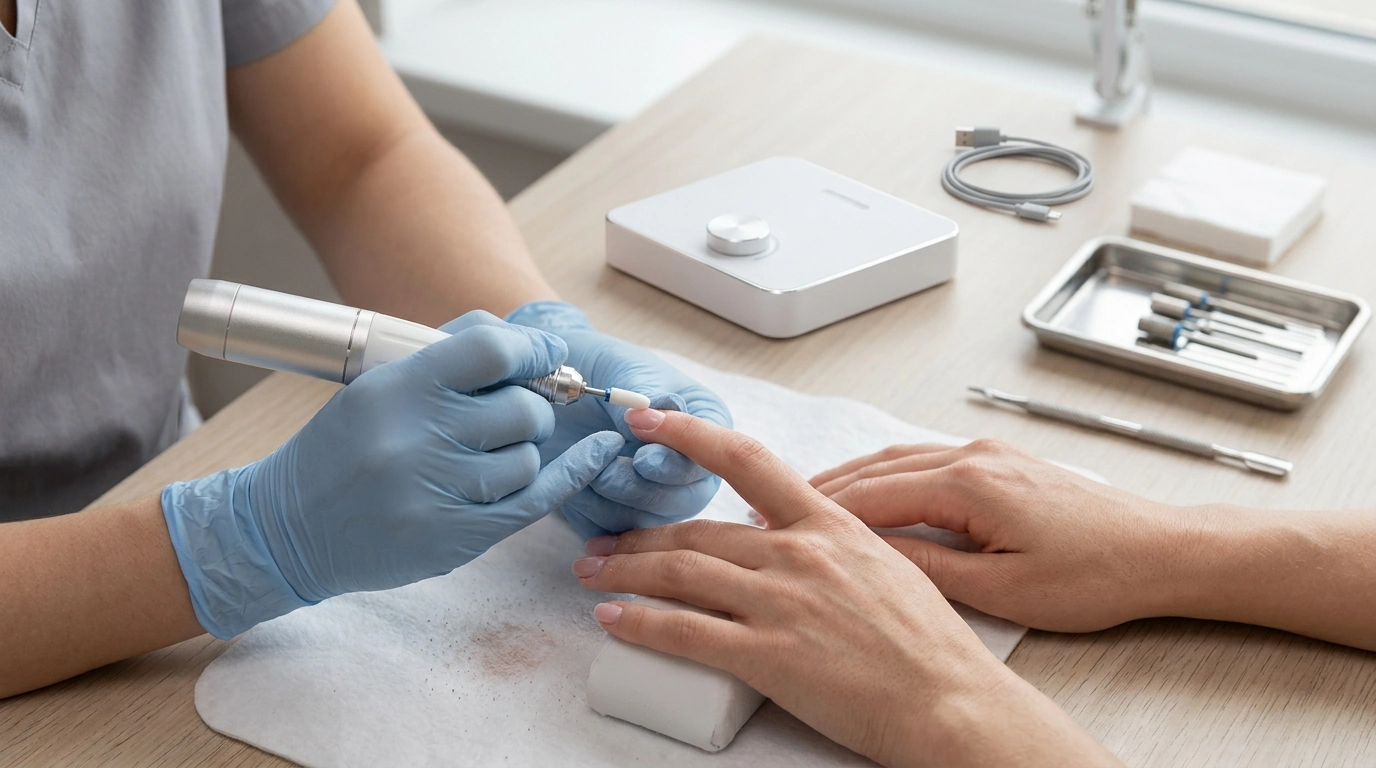
A high-speed nail drill can shorten prep time, smooth product faster, and help keep shaping consistent—when speed control and handling feel predictable. The 45000RPM Electric Nail Drill Machine with Pause Mode & USB Rechargeable is built around that idea: strong speed headroom for removal and refining, a pause function that supports steadier workflow, and USB charging that keeps your station flexible whether you’re set up at a desk or working on the go.
What makes this nail drill different
- 45000RPM speed range that can make removal and refining more efficient when paired with the right bit and light, controlled technique.
- Pause mode that temporarily stops rotation without wiping out your chosen speed—handy for checking symmetry, adjusting grip, or repositioning a finger.
- USB rechargeable power for cordless sessions and less clutter on smaller workspaces.
- Versatility across common services like gel polish removal, builder gel/acrylic debulk, and careful cuticle-area detailing (with appropriate, fine bits).
- Practical for travel or mobile setups where outlets are limited and cable drag gets in the way.
Where 45000RPM helps (and when it’s too much)
High RPM is most useful when you’re working on product—especially bulk removal—because it can reduce the time you spend filing. The key is that speed should replace force, not encourage it. If you find yourself pressing harder to “make it work,” it’s usually a sign to change the bit, adjust RPM, or refine your angle.
- High RPM can save time on hard product removal, but only with light pressure and correct bit selection.
- Lower speeds are typically more comfortable for natural nail work and for areas close to the cuticle.
- Faster isn’t always better: too much RPM plus pressure can create heat and discomfort (“ring of fire”) and may thin the natural nail plate.
- Start low and climb gradually, keeping the bit moving to prevent heat buildup.
- Use dedicated bits per step (removal vs. shaping vs. smoothing) so you don’t overwork one bit—or the nail—to do everything.
Suggested speed ranges by task (general guidance)
| Task |
Typical RPM range |
Notes for control |
| Gel polish removal (top coat/bulk) |
8,000–15,000 |
Keep the bit moving; stop before reaching natural nail. |
| Builder gel / acrylic debulk |
15,000–25,000 |
Use light pressure and a coarse/medium bit as appropriate. |
| Refining shape on product |
10,000–18,000 |
Switch to a finer grit to smooth without overheating. |
| Cuticle area detailing |
4,000–10,000 |
Use a small, fine bit; work gently and avoid lingering. |
| Natural nail surface prep |
3,000–8,000 |
Minimal abrasion; avoid thinning the nail plate. |
Pause mode: small feature, big workflow upgrade
Pause mode tends to matter most when technique is improving or when you’re aiming for consistency across all ten nails. Instead of fully powering down (and then re-dialing a comfortable setting), you can pause, reset your hand position, and continue at the same speed you were using.
- Reduces slip risk when you need to change finger angle mid-pass.
- Makes inspections easier for thickness, apex, and sidewall symmetry without breaking rhythm.
- Convenient for quick interruptions like wiping dust, changing bits, or re-centering your grip.
- Encourages steadier pacing for beginners who want more control without feeling rushed.
USB rechargeable convenience and charging habits
Cordless use can make detailed work feel more stable because you’re not fighting a cable or searching for an outlet close enough to your station. USB charging also makes it easier to keep the drill topped up using common power sources.
Comfort, vibration, and heat: what to watch during use
- Fatigue management: a steady grip and comfortable hand position matter during longer removals.
- Vibration check: if vibration feels excessive, confirm the bit is fully seated; replace bent or damaged bits and avoid running warped accessories.
- Heat control: heat is commonly caused by pressure + staying in one spot. Lighten touch and keep a consistent, gliding motion.
- Work in passes: remove product gradually rather than trying to clear one area in a single heavy pass.
- Dust control: brush away dust frequently and consider a mask or collector for fine particles. For workplace guidance, OSHA’s overview of nail salon health hazards is a useful reference: OSHA – Health Hazards in Nail Salons.
Cleaning and hygiene for safer nail services
- After every session: remove visible dust from the handpiece exterior and control unit using appropriate wipes.
- Bit hygiene: use dedicated bits per person when possible; otherwise clean and disinfect according to product instructions and local regulations.
- Dry fully before storage: store bits in a clean, dry container after disinfection to prevent re-contamination.
- Hand hygiene: wash hands before and after services. A straightforward refresher is available at CDC – Handwashing: Clean Hands Save Lives.
- Disinfectant selection: follow label directions and contact time. For background on using disinfectants responsibly, see EPA – Using Disinfectants to Control Germs.
Who it suits best
More in-stock picks
FAQ
Is 45000RPM safe for natural nails?
It can be used safely when RPM is kept low for natural nail work, paired with a fine bit and very light pressure. Higher speeds are generally best reserved for product removal and should not be used aggressively on the natural nail plate.
What does pause mode do during a manicure?
It temporarily stops rotation without resetting your selected speed. That makes it easier to reposition, wipe away dust, or check shape and thickness, then continue at the same setting.
How should drill bits be cleaned and disinfected?
Brush off debris first, then clean and disinfect according to the disinfectant label and any applicable local rules; dry completely before storing. Avoid soaking electronic parts—only compatible bits should be processed.
Recommended for you










Leave a comment