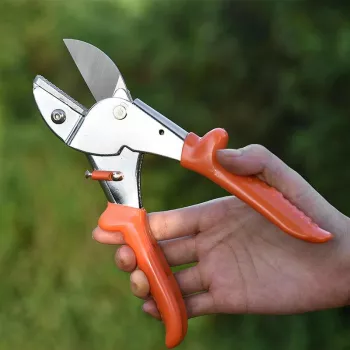
Clean, controlled cuts are the foundation of healthy plants—whether shaping roses, thinning shrubs, or harvesting herbs. Professional bypass pruning shears are designed to slice living stems with less crushing, helping reduce stress on plants and making repetitive garden tasks more comfortable. This guide focuses on what matters most in a daily-use pruner: cutting performance, comfort, upkeep, and safe technique.
Bypass pruning shears use two curved blades that pass each other like scissors. That “sliding” action typically produces a cleaner slice on live stems, especially compared with tools that crush material against a flat surface.
When a pruner gets used every week (or every day), small design details add up quickly. The best-feeling tool is usually the one that stays sharp, tracks straight through the cut, and doesn’t punish your hands after an hour of snipping.
For general pruning guidance and timing by plant type, reference university and extension resources such as University of California Agriculture and Natural Resources and the Clemson Cooperative Extension.
Use this quick reference to match common garden tasks to the right cutting approach. If stems resist strongly or require twisting force, move up to larger tools to avoid damaging plants and the pruner.
| Task | Stem/branch type | Recommended tool | Cutting tip |
|---|---|---|---|
| Deadheading flowers | Soft green stems | Bypass pruning shears | Cut just above a healthy node; keep blades clean of sap |
| Shaping shrubs | Mixed green and semi-woody growth | Bypass pruning shears (light work) | Make angled cuts to shed water; avoid tearing by cutting in one motion |
| Removing thin dead twigs | Dry brittle stems | Bypass shears or anvil pruners | Support the branch with the free hand to prevent bark peel |
| Thick woody branches | Hard wood over hand-pruner capacity | Loppers or pruning saw | Use the 3-cut method on larger limbs to prevent bark stripping |
For additional pruning principles (like making proper cuts at buds and branches), the Royal Horticultural Society (RHS) pruning guidance is a helpful companion resource.
Even premium shears can leave rough cuts if they’re positioned poorly. A few technique habits protect plant tissue and keep the tool aligned.
Good maintenance is less about big tune-ups and more about small, consistent habits that prevent rust, sap buildup, and loosened pivots.
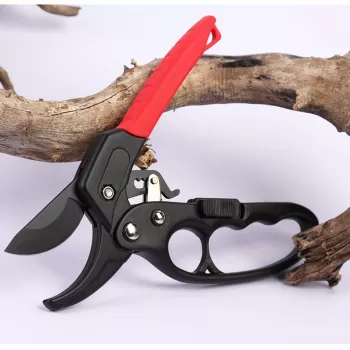
If you want a reliable daily driver for living growth, Professional Bypass Pruning Shears for Garden and Horticulture are built around the core goal that matters most: clean, controlled cuts that feel predictable in the hand.
Yes—bypass shears generally make a cleaner, more precise cut on green growth because the blades slice past each other like scissors. For thick, woody branches that exceed hand-pruner capacity, switch to loppers or a pruning saw to avoid crushing and tool damage.
Sharpen when cuts start to require extra force or when you notice frayed edges on stems. Frequent light touch-ups are often easier and produce better results than waiting until the blade is very dull.
Disinfect between plants when disease is suspected, when pruning infected material, or during high-risk periods to reduce pathogen spread. Use an appropriate disinfectant and dry the tool afterward to help prevent corrosion.











Leave a comment