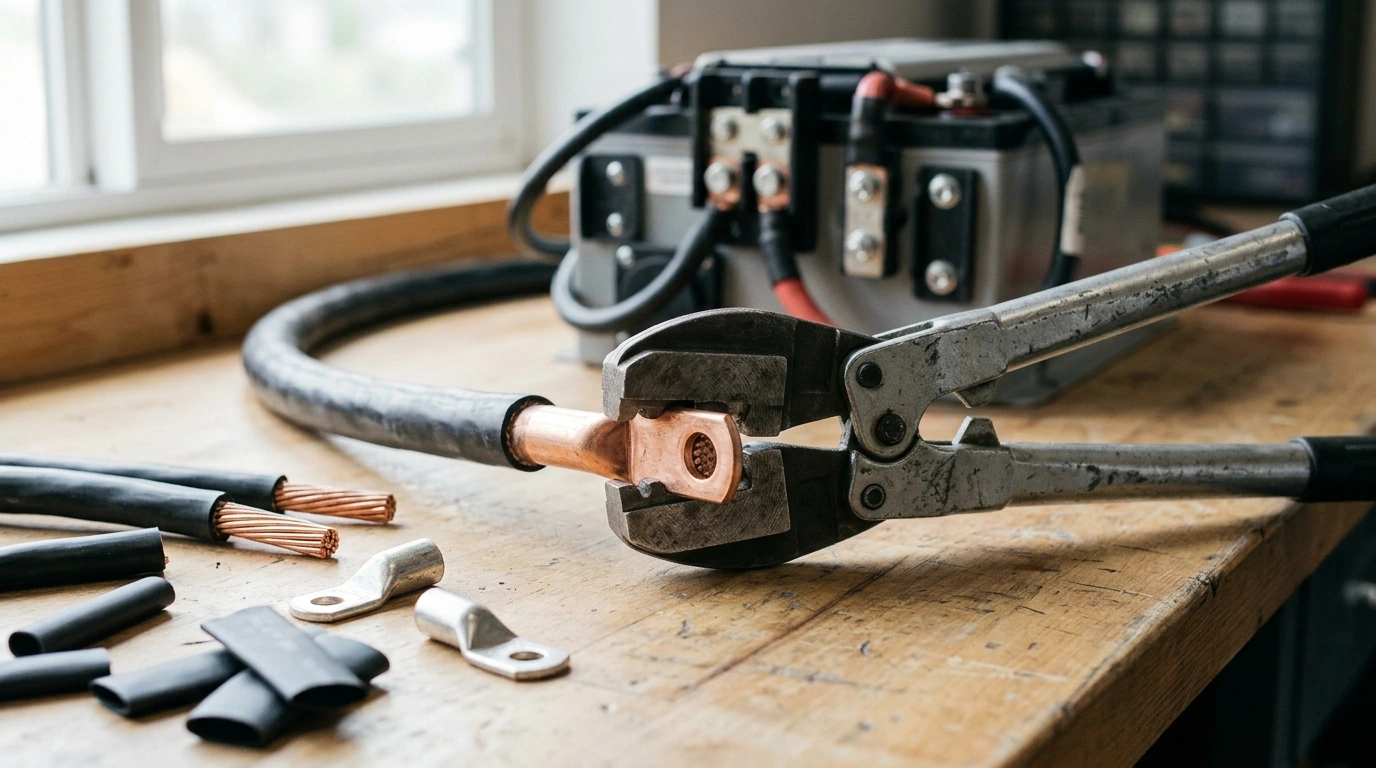
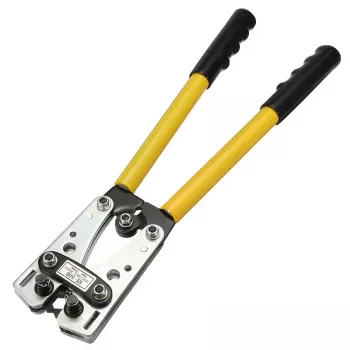
Crimping large cable lugs and tube terminals demands consistent compression, correct die sizing, and a tool built for higher forces. 6–50 mm² crimp tube terminal crimper pliers are made for heavy-gauge electrical work where a secure mechanical hold and low-resistance contact matter for safety and performance—especially in automotive, solar, marine, and general power distribution jobs. When a connection has to survive vibration, temperature swings, and real current draw, a repeatable crimp is often the most dependable approach. For more guidance, see Crimp (joining).
In these settings, a “good enough” crimp can turn into voltage drop, heat, and intermittent faults. A purpose-built crimper helps keep compression more uniform, which supports both pullout strength and consistent electrical contact. For further reading, see Hydraulic Battery Lug Crimper, AWG12-2/0, 9 Die Sizes, 6T ….
If you’re working to a formal standard or customer spec, check the terminal manufacturer’s application notes. Many publish crimp guidance and inspection criteria that can prevent failures down the road (see the documentation resources from TE Connectivity).
Start with the conductor cross-sectional area (mm²) printed on the cable insulation or stamped/marked on the terminal barrel. The goal is to compress the barrel enough to cold-form around the strands without cutting them or cracking the lug.
| Crimp size (mm²) | Typical cable type | Common applications | Quick check after crimp |
|---|---|---|---|
| 6 | Stranded power cable | Motorcycle/ATV leads, small inverter leads | No strand cut; barrel fully compressed; firm pull test |
| 10 | Stranded power cable | Automotive accessory feeds, small battery cables | Conductor fully inserted; no barrel cracking |
| 16 | Stranded power cable | Aux battery to fuse/distribution, moderate-current runs | Crimp centered; terminal eye stays aligned |
| 25 | Stranded power cable | Inverter/DC-DC wiring, marine DC panels | No visible gaps at barrel seam; insulation support intact if present |
| 35 | Stranded power cable | High-current battery cables, winch wiring | Crimp impression uniform; lug sits flat on stud |
| 50 | Stranded power cable | Large inverters, heavy distribution, battery banks | No rotation between cable and lug by hand; clean strain relief with heat-shrink |
For applications that involve compliance or certification requirements, it can help to reference connector standards and verification practices from organizations like UL Solutions.
Yes, as long as the AWG conductor cross-section matches a supported mm² die size. Use cable/terminal markings or a conversion chart, and follow the terminal manufacturer’s crimp guidance for that specific lug.
Confirm full insertion, centered compression, and no split barrel, then do a firm pull test appropriate for the cable size. Also verify the lug can’t be rotated by hand and that the connection stays cool under normal load.
Usually not for high-vibration or high-current work because solder can wick into strands and create a stress point. A correct crimp plus proper sealing/strain relief is typically preferred unless a specific procedure requires solder.









Leave a comment