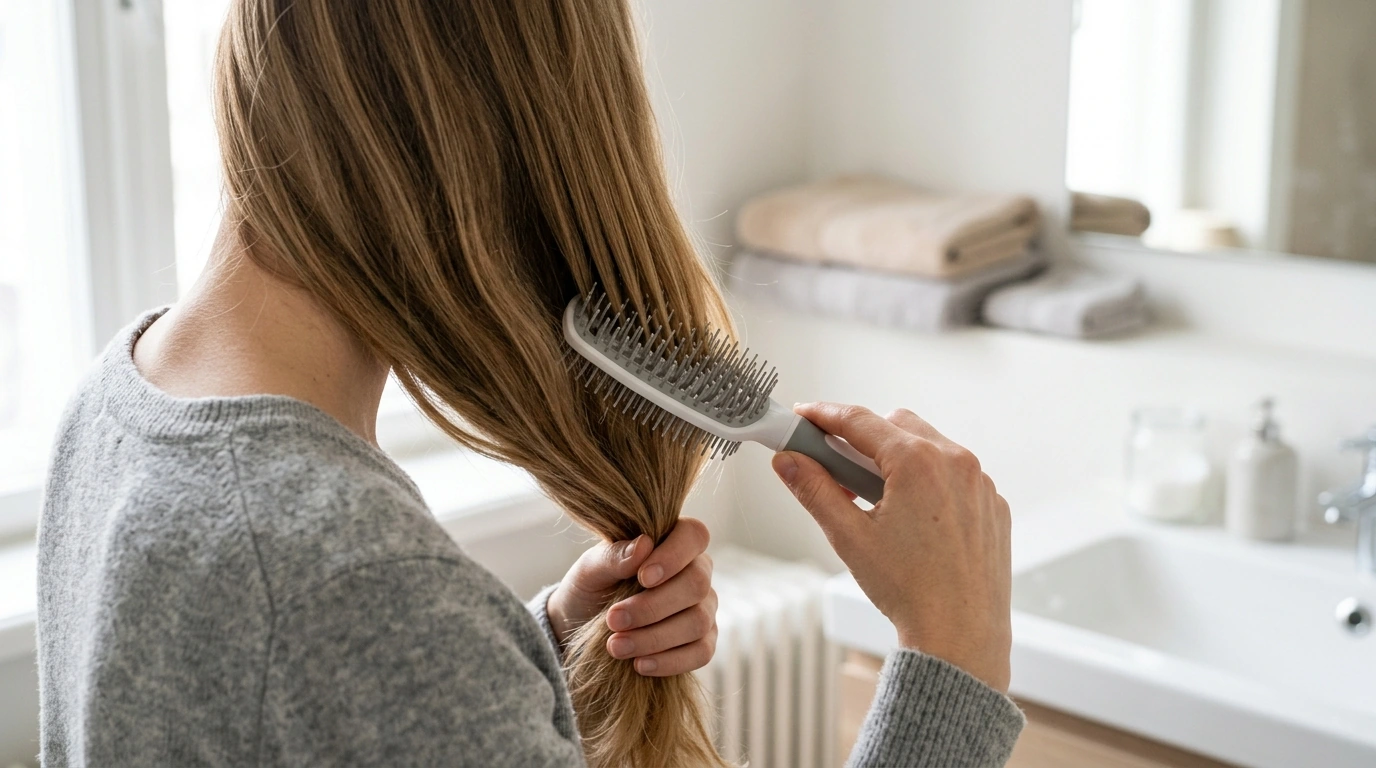
Static and stubborn knots can turn everyday brushing into breakage, frizz, and unnecessary tugging. An anti-static detangling brush is designed to glide through hair more easily, helping reduce flyaways while keeping brushing gentler on strands. The result is a smoother finish—especially on lengths and ends—without needing to “fight” your hair every morning.
When hair is dry (think winter air, indoor heating, or over-washed lengths), friction from brushing can lift the cuticle and create static—those wispy flyaways that make hair look rougher than it actually is. An anti-static detangling brush helps minimize that charge while also making knots less of a tug-of-war.
If brushing usually leaves hair “puffy” or crackly, the biggest upgrade is often gentler contact and fewer harsh passes—not brute force.
Almost anyone can use a detangling brush, but certain hair types and routines tend to see the most noticeable difference in comfort, frizz control, and reduced snapping.
For general hair-care guidance, the American Academy of Dermatology Association shares practical tips on everyday hair and scalp care at aad.org.
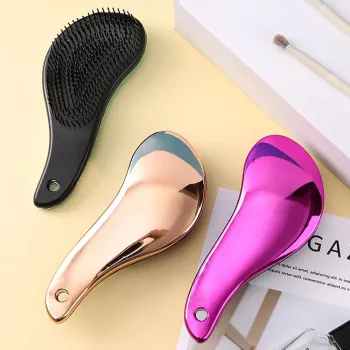
If you want a lightweight brush that’s easy to keep in rotation—bathroom counter, gym bag, or carry-on—this option is built for everyday detangling with less static drama.
| Item | Details |
|---|---|
| Product | Anti-Static Detangling Hair Brush |
| Price | 10.95 USD |
| Availability | In stock |
| Use | Detangling, smoothing, reducing flyaways from static |
A great brush can’t fully “undo” rushed technique. The biggest difference comes from reducing tension on the hair fiber—especially around tight knots, fragile ends, and recently bleached or heat-styled lengths. Cleveland Clinic also outlines common causes of breakage and prevention habits at health.clevelandclinic.org.
A helpful rule: if you can hear the brush “crunching” through knots, slow down and reduce pressure until the sound softens.
Detangling isn’t one-size-fits-all. Matching technique to texture helps you keep definition (waves/curls), avoid breakage (fine or processed hair), and reduce friction (anyone dealing with dryness).
Brushing products, oils, and shed hair can build up at the bristle base, which reduces glide and can make detangling feel rougher over time. A quick upkeep routine keeps performance consistent.
It can reduce flyaways caused by static and brushing friction, but frizz also depends on moisture balance, damage level, humidity, and styling habits. Pairing gentle brushing with conditioner or a leave-in usually makes the biggest difference.
It depends on hair type and routine: many people prefer detangling with conditioner on damp hair for extra slip, while others gently detangle dry hair before washing to reduce time in the shower. Either way, handle wet hair carefully and avoid pulling hard through knots.
Remove shed hair after each use, then wash the brush periodically based on buildup—often weekly to monthly. Regular cleaning helps maintain glide and keeps the brush more hygienic.









Leave a comment