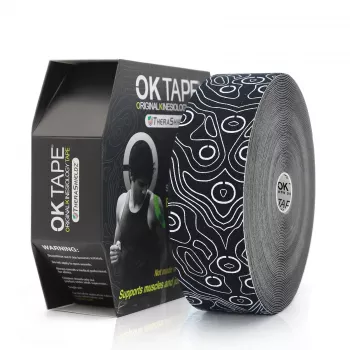
Designed for training rooms, clinics, teams, and at-home recovery routines, this bulk roll provides long-lasting support for muscles and joints while allowing a full range of motion. The latex-free design focuses on comfortable wear, dependable adhesion, and flexible support across everyday activity and sport.
Kinesiology tape is commonly chosen when support is needed without the “locked-in” feel of rigid athletic tape. It’s a practical option for athletes, active workers, and anyone who wants movement-friendly reinforcement during training blocks or day-to-day tasks.
For a general overview of common uses and how kinesiology tape is typically applied, see Cleveland Clinic’s kinesiology tape guide.
Bulk tape shines when taping is part of a routine—whether that’s an athletic season, a long rehab timeline, or a clinic schedule with multiple clients. A longer roll means fewer mid-week “we’re out of tape” moments and more consistent taping from session to session.
| Detail | What it means in practice |
|---|---|
| Roll size: 31.5yd x 2in | Cut to fit many body areas; good for frequent taping needs |
| Latex-free | Better option for people avoiding latex exposure |
| Therapeutic athletic tape style | Designed to move with the body rather than immobilize it |
| Bulk format | Useful for teams, clinics, or anyone who tapes regularly |
Latex-free construction is a smart choice for many environments—especially shared training rooms or workplaces that prefer to limit latex exposure. That said, “latex-free” doesn’t automatically mean “irritation-proof,” since adhesives and friction can still bother sensitive skin.
For background on adhesive-related irritation and contact dermatitis, reference Harvard Health’s contact dermatitis overview.
The main advantage of kinesiology tape is that it’s built for motion. When applied with appropriate tension and solid anchors, it can feel supportive during dynamic activity while still allowing joints and muscles to work through normal ranges.
Those interested in the broader research landscape can explore summaries and reviews via PubMed search results for kinesiology taping reviews.
Good application matters as much as the tape itself. Small details—like rounding corners and using zero-stretch anchors—often make the difference between a clean 2–3 day wear and edges that peel after the first workout.
| Option | Best for | Trade-offs |
|---|---|---|
| Bulk kinesiology tape roll | Custom fits, frequent taping, movement-friendly support | Requires cutting and technique practice |
| Rigid athletic tape | Immobilization and firm restriction | Less mobility; can feel stiff during activity |
| Pre-cut kinesiology strips | Fast application with minimal cutting | Less flexible sizing; usually higher cost per use |
Many people wear kinesiology tape for 1–3 days, though wear time varies with skin sensitivity, sweat, water exposure, and how well it’s applied. Remove it sooner if you notice itching, burning, or persistent redness.
Latex-free tape reduces latex exposure, but irritation can still happen from the adhesive, friction, or too much stretch on the skin. Patch testing, using no-stretch anchors, and stopping use at the first sign of a reaction can improve comfort.
Kinesiology tape is often designed to tolerate moisture, especially when applied well in advance and rubbed to activate the adhesive. After water exposure, pat the tape dry and consider removing it if edges lift or the skin feels irritated.









Leave a comment