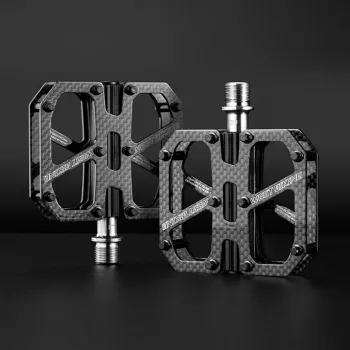
Ultralight pedals can sharpen acceleration feel and reduce rotating mass, but only if the interface stays stable under hard efforts and changing weather. Carbon fiber bodies paired with a titanium axle aim to balance low weight, stiffness, and corrosion resistance for road, gravel, and fast commuting setups. When the platform feels solid underfoot and the bearings stay smooth in the long run, the upgrade can be noticeable every time you jump out of a corner, stand on a short climb, or sprint to a stoplight.
A carbon fiber pedal body is all about delivering a light, rigid structure that doesn’t feel vague when you load it up. Compared with bulkier composite or alloy bodies, carbon fiber helps prioritize grams while still aiming for a firm platform under steady torque.
The titanium axle is the other half of the equation: it’s chosen to reduce weight versus steel and to resist corrosion when bikes see rain, sweat, and winter road spray. That material pairing also suits riders who care about clean, modern component design—especially on minimalist builds where every part is visible.
For many bikes, pedals are a practical weight-focused upgrade because they don’t require drivetrain changes, wheel swaps, or complex fit adjustments. You get a direct touchpoint improvement without reworking the rest of the build.
“Titanium axle” is a strong start, but performance depends on machining accuracy, surface finishing, and how the axle is designed for bending loads. A well-made titanium spindle can deliver daily-riding strength with excellent corrosion resistance.
Prioritize smooth rotation out of the box and minimal side-to-side play. If long-term ownership matters, look for a design that can be serviced so you can refresh grease and bearings instead of replacing the entire pedal set.
A wider, more supportive contact area can reduce hotspots and improve control during sprints and climbs. Even small changes in stability can reduce the “micro-adjustments” that fatigue feet and ankles on longer rides.
Seals matter as much as materials. Better sealing reduces grit intrusion on dusty gravel rides and helps prevent premature bearing wear after wet commutes.
Confirm whether the pedal is intended to be flat or clipless and make sure it matches your shoes and riding style. Also check the thread standard—most adult bikes use 9/16″—so you don’t risk cross-threading or a poor fit.
Most adult cranks use 9/16″ threads, but it’s worth confirming before ordering—especially on older bikes, kids’ bikes, or specialty cranks. Pedals are typically marked L and R, and the left pedal tightens counterclockwise (reverse-thread) while the right pedal tightens clockwise.
For installation, apply a small amount of grease or anti-seize to the pedal threads to reduce creaking and prevent the spindle from seizing into the crank. A torque wrench is ideal, but even without one, a firm, controlled tightening is better than over-torquing. If you want a compact bench tool for small bike accessories and garage tasks, the Electric Precision Screwdriver Set for Small Electronics can complement a basic bike-tool kit (though pedals themselves typically use a hex key or pedal wrench, depending on design).
For step-by-step guidance, Park Tool’s reference on pedal installation and removal is a dependable walkthrough.
In rain and grit, traction and sealing matter as much as low weight. If your riding includes frequent wet commutes, consider adding visibility and security around your bike parking area; the Solar-Powered Motion Sensor Alarm Light is a simple add-on for a garage, shed, or entryway.
For more technical background on pedal standards and designs, Sheldon Brown’s overview of bike pedals is a useful resource.
| Item | What to verify | Why it matters |
|---|---|---|
| Axle material | Titanium axle | Lower weight and good corrosion resistance |
| Body material | Carbon fiber | Lightweight, stiff platform feel |
| Thread standard | 9/16″ (most adult bikes) | Ensures proper fit and safe installation |
| Bearings | Smooth rotation, minimal play | Efficiency, comfort, and durability |
| Sealing | Dust/water protection | Better longevity in rain or gravel dust |
| Installation | Grease/anti-seize + correct tightening | Reduces creaks and prevents seized threads |
Ultralight Carbon Fiber Bike Pedals with Titanium Axle is a focused upgrade aimed at lowering weight while keeping a rigid, responsive feel. It’s best suited for riders who want materials chosen for stiffness and corrosion resistance and who value a clean look on performance-oriented builds.
Before ordering, confirm your current pedal type (flat vs clipless), crank thread standard, and the kind of weather your riding sees most often. When you’re ready, you can check current price and availability and compare it against your current setup.
They can be, and many riders use titanium axles daily without issue. Strength depends on axle design and manufacturing quality, so match the pedal to your riding style and periodically inspect for play or damage.
They don’t require complicated care, but they should be inspected after impacts for cracks or deep gouges. Avoid harsh solvents and don’t pressure-wash directly at bearing seals; replace the pedal if structural damage is suspected.
Pedals influence stability underfoot, bearing smoothness, and how consistently your shoe is supported, which can reduce hotspots and improve control. Shoe fit and cleat/foot position (if applicable) still play a major role in overall comfort.











Leave a comment