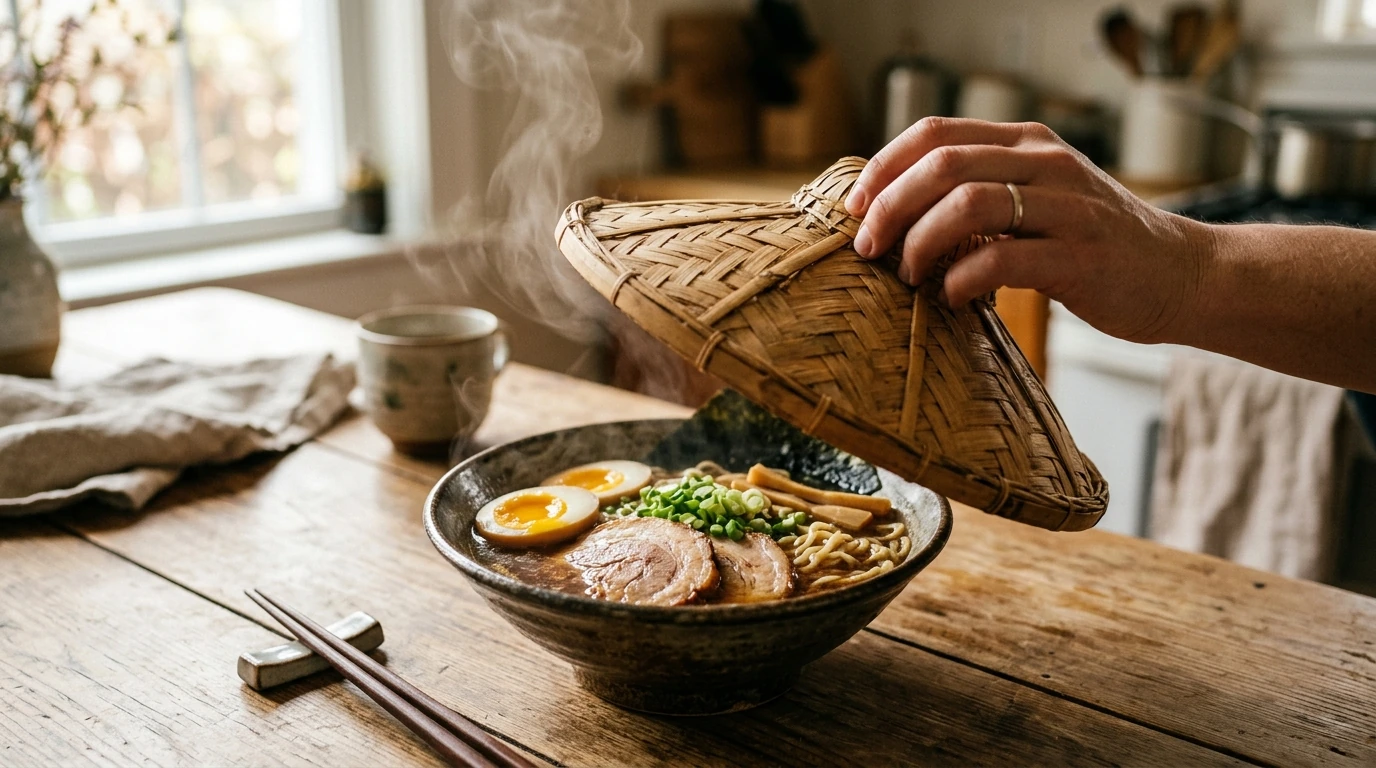
A bamboo hat noodle bowl brings a touch of Japanese street-style presentation to ramen nights and quick lunches, pairing a practical serving bowl with a distinctive woven lid that helps retain heat and keeps toppings fresh until it’s time to eat. It’s the kind of tableware that turns a simple weeknight bowl into a small ritual—cover, carry, set down, then lift the “hat” for that satisfying reveal of steam, aroma, and color.
What Makes a Bamboo Hat Noodle Bowl Different
Most noodle bowls are all about capacity and shape. A bamboo hat noodle bowl adds a second dimension: a lid with a signature silhouette that changes the way food is served and enjoyed.
- Signature look: Inspired by woven bamboo hat shapes often used as covers in traditional-style food service, the lid adds a rustic, handcrafted feel to the table.
- Helps reduce heat loss: Keeping a cover on hot broth can slow down cooling and keep steam where it belongs—over the noodles rather than in the room.
- Protects between kitchen and table: The lid can shield noodles and toppings from dust or splatter while you finish plating or move dishes to the table.
- A “reveal” moment: Great for ramen, udon, soba, pho-style broths, and donburi-style rice bowls where presentation matters.
- Extra surface when needed: Depending on stability and cleanliness, the lid can work as a temporary rest for utensils or a brief holding spot for certain garnishes (use common sense to keep foods safe and appealing).
If you want one serving piece that feels both practical and special, this bowl-and-lid set delivers with a design-forward focus on warmth, timing, and presentation.
Quick Details
| Feature |
Details |
| Product name |
Japanese Bamboo Hat Noodle Bowl |
| Price |
43.67 USD |
| Availability |
In stock |
| Ideal uses |
Ramen, udon, soba, noodle soups, rice bowls |
| What stands out |
Bamboo hat-style lid for heat retention and presentation |
Best Uses: From Ramen Night to Casual Entertaining
The lid isn’t just decorative. It’s useful any time your meal has moving parts—broth simmering, noodles timing out, toppings waiting to be added.
- Ramen and noodle soups: Keep broth warmer while you slice scallions, portion chashu, or finish soft-boiling eggs.
- Cold noodles (zaru-style inspiration): Cover until serving to keep aromas clean and prevent the surface from drying out in the fridge.
- Rice bowls: Cover while steaming rice or while warm toppings rest briefly before plating.
- Small gatherings: Serve a cohesive set of bowls so guests arriving at different times still get a hot, fresh experience.
- Photography-friendly plating: The woven lid adds texture and a traditional, rustic look that frames the meal beautifully.
For a quick ramen refresher and the dish’s cultural context, Britannica’s overview of ramen is a solid reference.
How to Use It for Better Texture and Temperature
Small steps make a noticeable difference in noodle texture, broth temperature, and topping freshness—especially when you’re cooking for more than one person.
For hot ramen, udon, and soups
- Pre-warm the bowl: Fill with hot water for about a minute, then carefully empty and dry before adding broth. This reduces the initial temperature drop.
- Cover while you finish: Keep the lid on while noodles finish cooking or while you do final topping prep, so steam stays concentrated.
- Time delicate toppings: Add nori, sliced scallions, and crisp tempura bits right before the final cover to limit sogginess.
- Use the lid thoughtfully: If it’s stable and clean, the lid can briefly hold chopsticks or a spoon between bites—just avoid letting liquids pool on woven surfaces.
For cold noodles
- Keep things cool and covered: Chill the bowl if the material allows, then cover until serving so noodles don’t dry out and pick up fridge odors.
Care and Cleaning Tips for Bamboo and Bowl Sets
Woven bamboo looks best when it’s cleaned gently and dried thoroughly. If you want a reliable baseline for kitchen cleanliness, the USDA’s guidance on cleaning and sanitizing kitchen equipment is a helpful standard to follow.
- Hand-wash when possible: Use mild soap and a soft cloth or sponge; avoid long soaks that can encourage warping.
- Dry completely: Towel-dry, then air-dry in a well-ventilated spot to help prevent odors or mildew in woven areas.
- Skip harsh abrasives: Rough scrubbers can snag the weave and dull finishes.
- Store with airflow: Avoid sealing bamboo in a cabinet while it’s still damp.
- Follow bowl material needs: If the set includes ceramic or wood elements, use material-specific care to prevent cracking or splitting.
Pairing Ideas: What to Serve in a Bamboo Hat Bowl
The best meals for this style of bowl are the ones that benefit from a little heat and a little drama at the table.
Who It’s For
In-Stock Picks
FAQ
Is the bamboo hat lid safe to wash with soap and water?
Yes—gentle hand-washing with mild soap and water is best. Avoid prolonged soaking, and dry the lid thoroughly after washing to help prevent odors or mildew in the weave.
Does the lid actually keep ramen hot longer?
A cover generally reduces heat loss by trapping steam and limiting exposure to cooler air. Results vary based on room temperature, the bowl material, and how long the lid stays on.
What foods work best in a bamboo hat noodle bowl besides ramen?
Udon, soba, other noodle soups, and donburi-style rice bowls all work well. It’s also useful for briefly covering food between prep and serving so toppings stay fresher.
Recommended for you










Leave a comment