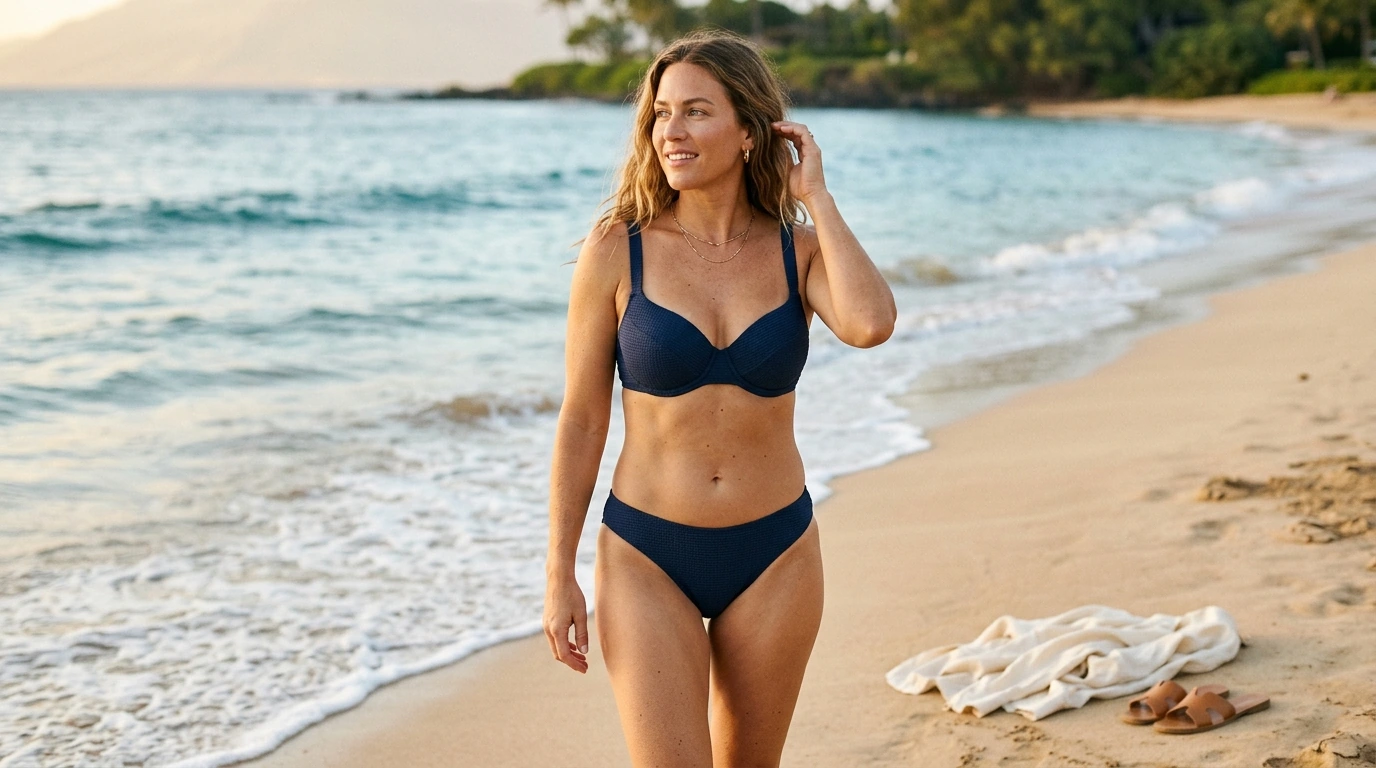
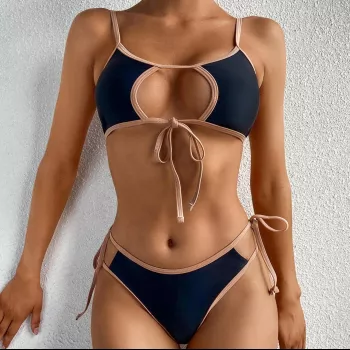
A low-waist bikini with a push-up top is built for a confident, leg-lengthening silhouette while keeping support and comfort in focus. The right set should feel secure when you move, sit smoothly against the body, and hold its shape after repeated wears. Below, you’ll find the design details that matter most, fit tips that prevent common issues (like gaping cups or shifting bottoms), and simple care habits that help your suit stay vibrant and supportive season after season.
Low-waist, push-up bikini sets balance two goals: a sleek, modern line through the hips and a lifted, centered shape at the bust. When both pieces fit correctly, the overall look is polished rather than fussy—no constant tugging, no awkward gaps, and no digging edges.
A push-up bikini top looks best when it’s doing its job quietly—supporting from the band, holding smoothly in the cups, and staying stable during movement. If the band is too loose, straps tend to overwork (and slip). If the cups are off, you’ll notice cutting in, gaping, or a neckline that won’t lie flat.
| Area | Good Fit Looks Like | If Not, Try |
|---|---|---|
| Band | Snug, level, stays in place when arms lift | Tighten band/closure; consider sizing down if it slides |
| Cups | No gaping, no spillage, smooth neckline | Adjust straps/padding; consider a different cup size |
| Straps | Secure without digging; minimal slipping | Shorten straps; reposition to sit flatter on shoulders |
| Center/Front | Comfortable and stable when moving | Check cup coverage; ensure band isn’t too loose |
Low-waist bottoms sit below the natural waist, so comfort is mostly about the hips and leg openings. A flattering low-rise should lie flat at the sides, stay aligned when you walk, and feel secure without pinching—especially at the leg seam.
A quick real-life check: after putting the bottoms on, take a few steps, sit down, and stand again. If the sides roll or migrate, you’ll likely be adjusting all day. If the leg opening leaves deep marks, size up or look for a softer edge finish.
The easiest way to get a confident fit is to measure once and match the product size chart. Swim fabric stretches, but you still want the “right kind” of snug—supportive in the top, secure at the hips, and comfortable at the seams.
If you’re using sunscreen, applying it a bit before dressing can help reduce direct transfer onto fabric. For practical sun-safety guidance, see the American Academy of Dermatology Association’s sunscreen FAQs. For garment-care labeling basics, the Federal Trade Commission’s Care Labeling Rule is a helpful reference.
Use underbust and bust measurements first, then confirm with the product size chart. The band should be snug and level, and the cups should sit smoothly without gaping or spilling. If you’re between sizes, prioritize band fit for support and fine-tune with strap and padding adjustments.
They can, as long as the hip fit is secure and the leg openings lie flat without pinching. Do a quick movement test—walk, sit, and twist—when trying on. If the sides shift easily, a slightly firmer fit or a different size usually helps.
Rinse after wear and hand wash in cool water with a gentle cleanser, then press out water with a towel instead of wringing. Dry flat in the shade, and remove and reshape padding when possible to help it keep its form.











Leave a comment