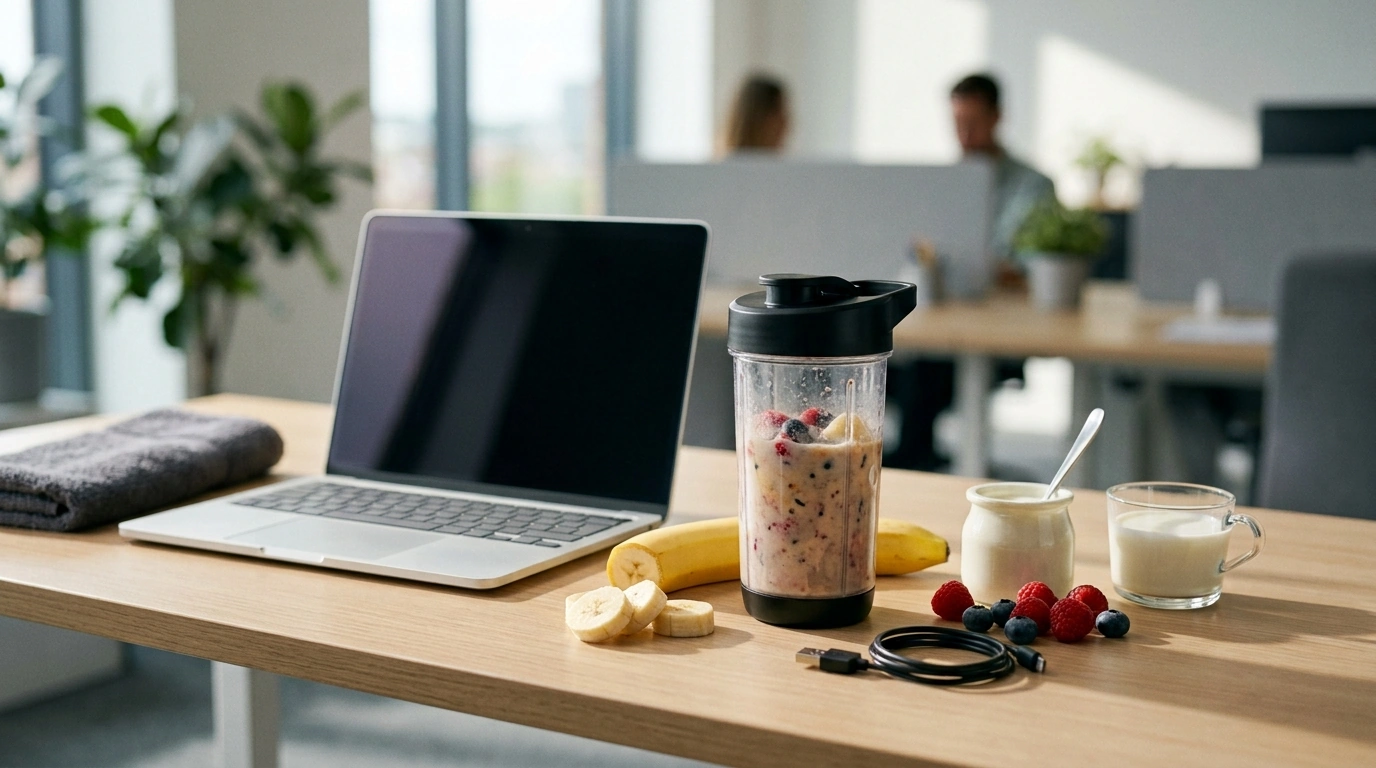
A compact USB-powered blender can turn fresh fruit into a quick smoothie at a desk, in a dorm, or after a workout—without hauling a full-size appliance. The key is knowing what a mini blender is great at (single-serve drinks and light purees), where it has limits (hard, dry, or extra-thick blends), and how to use it in a way that stays smooth, safe, and easy to clean.
Mini portable blenders shine when you treat them like a fast personal mixer rather than a heavy-duty kitchen workhorse.
If you’re blending on a schedule—between meetings, after class, or right after a workout—these strengths matter more than maximum power.
A “good” portable blend is mostly about order of operations. Small changes (like adding liquid first) reduce stalling and improve texture.
Practical rule: if the mixture won’t pour, it’s usually too thick for a mini blender. Add a splash of liquid and try again.
For a portable blender you’ll actually use every day, convenience features matter as much as speed. Focus on charging, seal quality, and cleanup simplicity.
| Need | Why it matters | Practical tip |
|---|---|---|
| USB charging | Easy recharging from common power sources | Charge after each use if blending daily |
| High-speed motor | Smoother texture with soft ingredients | Use enough liquid so ingredients circulate |
| Single-serve cup | Portion control and quick prep | Pre-portion fruit in containers for grab-and-go |
| Small-blend capability | Handles quick shakes and light purees | Chop ingredients small; avoid thick pastes |
| Easy cleaning | Less buildup and odor over time | Rinse immediately; deep clean regularly |
A tight-sealing lid is especially important if you plan to toss the cup in a backpack. Before you move it, double-check the lid and any gasket/seal surfaces are properly aligned and clean.
Portable blenders do best with ripe fruit, liquids, and mix-ins that dissolve or soften quickly.
If you want a colder drink, try chilled ingredients (refrigerated fruit, cold milk, or a few small ice chips) instead of stuffing the cup with solid ice.
Portable blenders stay fresher when you clean them immediately—especially after banana, nut butter, or protein powders.
For food handling basics—especially if you’re prepping smoothies ahead—reliable guidance from the USDA Food Safety and Inspection Service and the CDC can help you keep routines simple and safe.
| Item | Details |
|---|---|
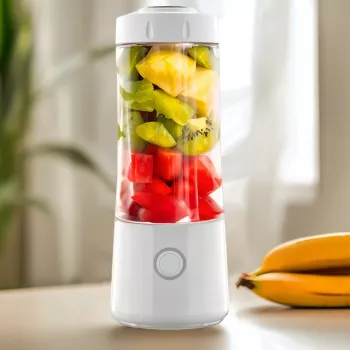
| Name | High-Speed Mini Portable Juicer – USB Electric Fruit Blender & Personal Food Processor |
| Price | 27.97 USD |
| Availability | In stock |
It depends on the size of the ice/frozen pieces and how much liquid you add. For best results, use small ice chips or partially thawed fruit, add liquid first, and avoid hard frozen blocks that can stall the motor.
For best quality, refrigerate promptly and aim to drink within 24 hours; separation is normal and can be shaken back together. If a smoothie sits at room temperature too long, it’s safer to discard it and make a fresh batch.
Rinse right away, then do a quick self-clean by blending warm water with a drop of dish soap and rinsing thoroughly. Keep electronic parts and the charging port dry, and use a soft brush carefully around the blade area.









Leave a comment